Realtor Portal
SolarFIX LLC
Solar inverter screen showing an error code

Bad inverter · Arizona: Dealing with a faulty solar inverter in Arizona

Inverters are the most likely thing to fail on a solar system. They're also the easiest to diagnose if you know what to look for. Here's how SolarFIX approaches a bad inverter in the Arizona heat.

See how it works, step by step ↓
★★★★★
Google 5-Star Rated
BBB
Accredited Business
10-Year
Workmanship Warranty
ROC 323541
Licensed, Bonded, Insured

Our diagnostic approach

How we diagnose a bad inverter

We get to the root cause first, then walk you through the repair or replace decision with actual cost numbers before doing more work.

  1. 1Error codes
  2. 2String tests
  3. 3Thermal check
  4. 4Your decision
  1. 01 · Step 1

    Read the error codes

    Every inverter has an error code table. The specific code narrows the diagnosis quickly.

    • Inverter display

      We read the code right off the screen.

    • Monitoring portal

      Fault history shows when it started and how often.

    • Zero production?

      Usually an inverter fault, a breaker trip or a downed string on that inverter's input.

    • Frequent restarts?

      Often internal capacitor or firmware issues.
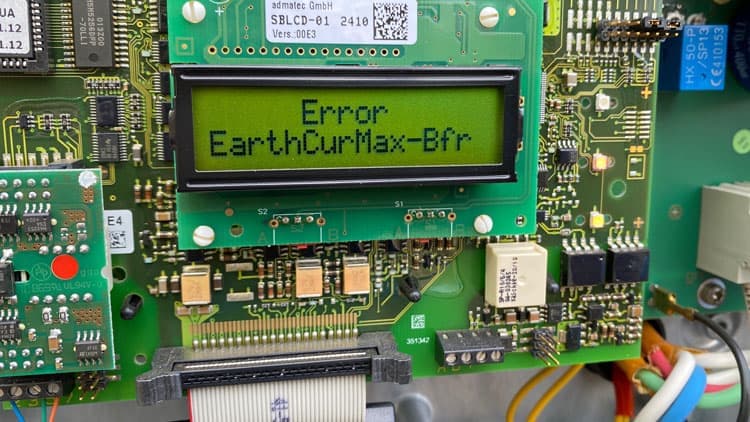
    Inverter screen showing an error code
  2. 02 · Step 2

    Test each string

    Voltage tests on each string confirm whether the input side is healthy.

    • Healthy input

      If the strings test fine, the problem is inside the inverter.

    • Weak string

      A downed or weak string can look like an inverter problem.

    • Reduced output

      Still producing at 60 to 70% of expected? Could be MPPT drift, aging capacitors or thermal throttling.

    • Connections

      Breakers and connections between panels and inverter get checked.

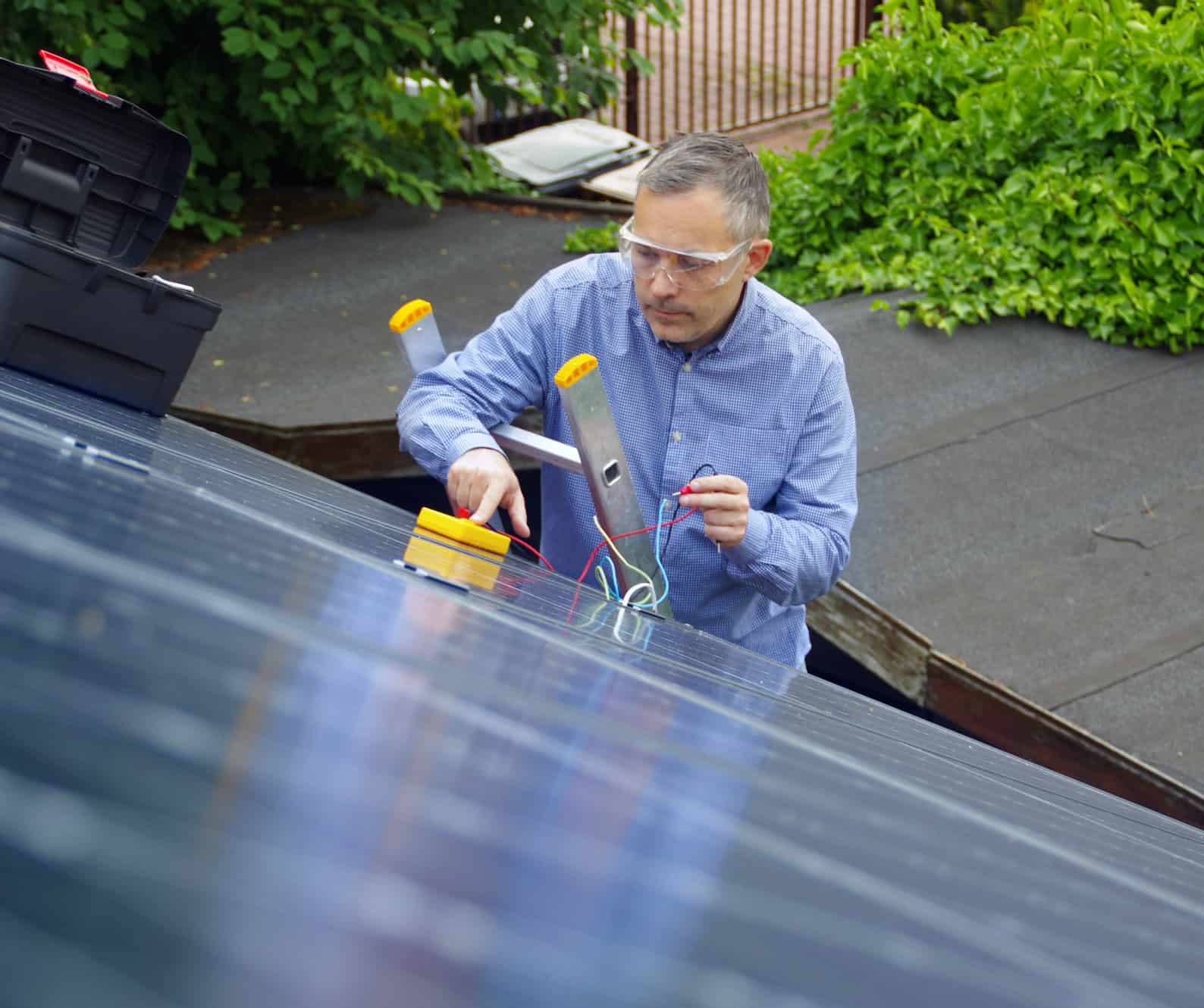
    Technician testing a rooftop solar system
  3. 03 · Step 3

    Find the heat

    Thermal imaging quickly identifies overheating components.

    • Loud or hot enclosure

      Fans running constantly and a hot case usually mean cooling problems or an over-current fault.

    • Intake filters

      Dust build-up restricts airflow and speeds up heat failures.

    • Mounting location

      Roof-mounted or south-facing inverters heat-soak faster than shaded installs.

    • Thermal derating

      Summer heat pushes inverter internals past their thermal derating point.

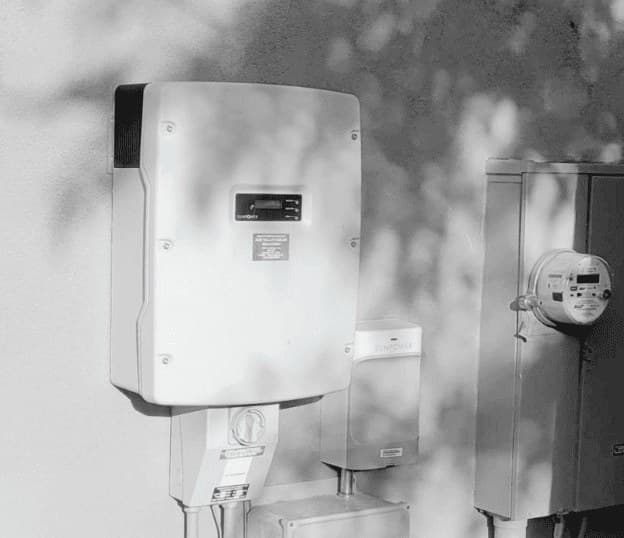
    Wall-mounted solar inverter in the sun
  4. 04 · Step 4

    Repair or replace

    A clear decision, with real pricing, before any further work.

    • Under 10 years

      Most failures are worth repairing.

    • Past 10 to 12 years

      If it's failing, replacement usually beats repair economically.

    • Real numbers

      We walk you through actual costs before doing more work.

    • Back online

      We test the system and confirm it's producing again.

    Technician working beside rooftop solar panels

The short version

Bad inverter, in five slides

Click through what to know when your inverter starts acting up.

Most likely to fail · 1/5

The inverter is usually the culprit

It's the part of a solar system most likely to fail, and the easiest to diagnose if you know what to look for.

Wall-mounted solar inverter next to a utility meter

Arizona

Why Arizona is hard on inverters

  • Summer temperatures push inverter internals past their thermal derating point
  • Dust builds up on intake filters, and restricted airflow speeds up heat failures
  • Monsoon-season power fluctuations stress capacitors and control boards
  • Roof-mounted or south-facing inverters heat-soak faster than shaded installs

Before you call

Have these handy

  • A photo of the error code on the inverter screen
  • Your monitoring app login
  • Your inverter's age, if you know it
  • Recent power bills
★★★★★

“The price was in budget and they were able to accommodate our roofer's schedule.”

Suzette L. · Google Review

★★★★★

“I highly recommend Solar Fix for their caring approach and top-notch service!”

Melissa D. · Google Review

★★★★★

“Very refined process in place here with lots of communication.”

Brian G. · Google Review

What we can help with

The five signals we see most

These are the most common signs of a bad inverter on our service calls.

01

Error codes and fault lights

Every inverter has an error code table. The specific code narrows the diagnosis quickly.

02

Zero production

Output dropped to zero. Usually an inverter fault, a breaker trip, or a downed string on that inverter's input.

03

Reduced output

Still producing, but at 60 to 70% of expected. Could be MPPT drift, aging capacitors or thermal throttling.

04

Frequent restarts

The inverter cycles on and off. Often internal capacitor or firmware issues.
05

Loud or hot enclosure

Fans running constantly and a case that's hot to the touch. Usually cooling problems or an over-current fault.

Inverter problems? Let's diagnose.

Call SolarFIX. We'll get to the root cause and lay out repair or replace options with real pricing.

Solar Inverter Repair service →

Inverter problems? Let's diagnose.

Call SolarFIX or send a request. We'll find the root cause and lay out repair or replace options with real pricing.

Tell us what you need

Property address
Property address
Property address