
Why Your Solar Panels Don't Work During a Power Outage
It surprises a lot of solar owners: the power goes out on a sunny afternoon, and the panels stop too. That's by design. Here's why it happens, what can keep some power on, and what to check once the grid is back.
“The price was in budget and they were able to accommodate our roofer's schedule.”
Suzette L. · Google Review
“I highly recommend Solar Fix for their caring approach and top-notch service!”
Melissa D. · Google Review
“Very refined process in place here with lots of communication.”
Brian G. · Google Review
The short answer
Most rooftop solar systems are grid-tied with no battery. When the grid goes down, they shut off on purpose, even in full sun. That's a safety feature, not a breakdown.
To keep some power on during an outage, a solar system needs a battery, a backup-capable inverter, or other equipment set up for it. Without that, your solar goes dark when your neighbors' lights do.
Why grid-tied solar shuts off
Your solar system normally sends power into your home's wiring and, when you make more than you use, out to the utility lines. During an outage, utility crews work on those lines. If your panels kept sending power out, a line a crew believes is dead could still be live.
A U.S. Department of Energy guide to connecting home generation to the grid calls this problem islanding: a system continuing to power a location even though power from the utility is no longer present. The same guide notes that modern inverters contain anti-islanding mechanisms. They watch the grid, and when it disappears, they stop sending power.
Industry summaries of the inverter safety standards (IEEE 1547 and UL 1741) describe that shutoff as happening automatically within 2 seconds when grid power fails. That's why you won't see your solar keep the house running for even a few minutes.
What happens after the power comes back
Once the grid is stable again, a grid-tied system is designed to wait a short time and then start producing on its own. You shouldn't have to do anything.
Here's what to check over the next sunny day:
1. Look at your monitoring app. Production should pick up during daylight hours. If the app is blank, the monitoring device may just need time to reconnect. 2. Look at the inverter. A normal status light is a good sign. Error codes, red lights or a blank screen are worth a photo. 3. Check the solar breaker. If the breaker for the solar system is off or tripped, note that and call for help before flipping it repeatedly.
If the system hasn't started producing after a full sunny day, have it looked at. Outages that come with storms or power surges can sometimes leave equipment that needs attention. Our guide to solar panel storm damage in Arizona covers what to look for after a monsoon.
Ways to keep power during an outage
There are a few ways to get some backup from solar. Each has trade-offs.
A home battery
A battery stores power and, with the right inverter and switching equipment, can disconnect your home from the grid during an outage and keep selected circuits running. Your solar can then recharge the battery during the day.
Many backup setups cover essential loads, such as the fridge, lights, internet and a few outlets, rather than the whole house. Central air conditioning takes a lot of power, so if you want it covered in an Arizona summer, that changes how big the system needs to be.
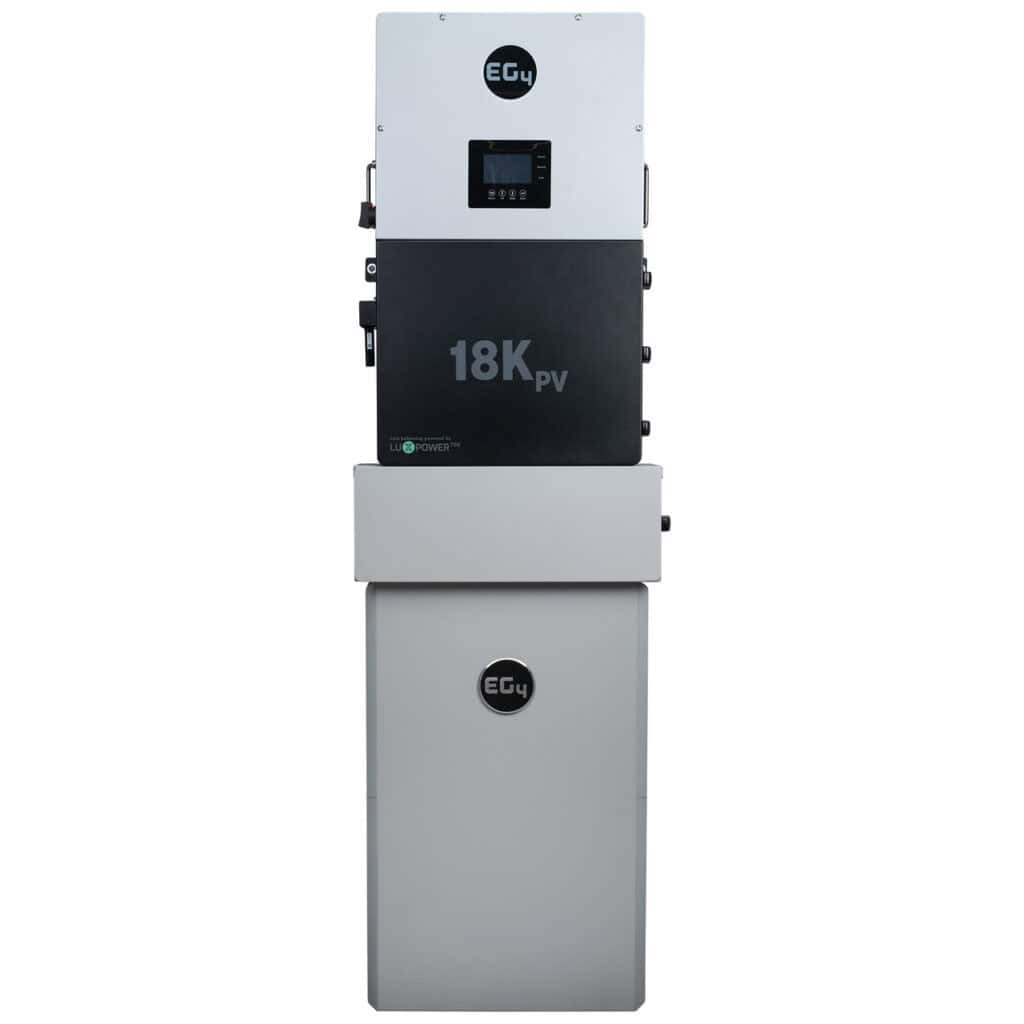
SolarFIX installs battery backup that can be added to the solar you already own, including EG4 and EcoFlow systems. Our battery backup and solar storage page explains how we go from your backup goal to an installed system.
Daytime backup without a battery
Some newer microinverters can make power during an outage without a battery. Enphase says its IQ8 microinverters with Sunlight Backup let homeowners power high-priority loads during a daytime grid outage, without a battery.
This needs extra equipment beyond the microinverters, and it only works while the sun is up. Third-party reviews point out that it gives no backup at night or during heavy cloud, and that output can swing as clouds pass. If you have IQ8 microinverters, ask your installer whether your system was set up for it.
A generator
A standby or portable generator doesn't rely on the sun, so it can run at night and through cloudy days. It needs fuel and a safe connection to your home, such as a transfer switch installed by an electrician. Never plug a generator into a wall outlet to backfeed the house.
Planned outages in Arizona
Most outages are unplanned, from monsoon storms, equipment failures or heat. But APS also uses Public Safety Power Shutoffs, turning off power ahead of time in high-risk areas to lower the chance of a wildfire. APS lists the areas as parts of Coconino, Gila, Navajo, Pinal and Yavapai counties, and it says it contacts affected customers by email, text or phone.
If you live in one of those areas and outages are a concern, that's worth factoring in when you think about backup. Keep your contact information up to date with your utility so you get the notice.
When to call for help
Get your system checked if:
- ▸Solar hasn't started producing after a full sunny day once the grid is back.
- ▸The inverter shows an error code or a blank screen after an outage.
- ▸The solar breaker trips again after it's reset.
- ▸You want to add battery backup and aren't sure whether your system can take it.
A solar repair visit can find out why a system didn't restart. For adding a battery, generator connection or panel work, our electrical services team handles the wiring side.
The bottom line
A grid-tied solar system that goes dark in an outage is doing what it was built to do: protecting the crews working on the lines. It should start again on its own once the grid is back. If you want power when the grid is down, you need a battery, backup-capable equipment or a generator, and a licensed company should help you decide which fits your system and what you want to keep running.
FAQ
Is my solar broken if it stopped during a power outage?+
Probably not. Most grid-tied systems are built to shut off when the grid goes down, so line crews aren't working on wires your panels are still powering. It should start again on its own after the grid comes back. If it doesn't restart within a day of sunshine, have it checked.
Can I use my solar during an outage without a battery?+
Usually not with a standard system. Some newer equipment, such as Enphase IQ8 microinverters with Sunlight Backup, can power high-priority loads during a daytime grid outage without a battery, but it needs extra equipment and only works while the sun is out.
Can I add a battery to the solar I already have?+
Often, yes. It depends on your inverter, your electrical panel and what you want to keep running. A licensed solar company can tell you what fits your system.
Related: Battery backup and solar storage · EG4 battery backup · EcoFlow battery backup retrofit · Electrical services · Solar repair
Want some power when the grid goes down?
Tell SolarFIX what kind of solar system you have, a photo of your inverter label if you can, and what you'd want to keep running in an outage. We'll help you sort out which backup options fit.