

Are Your Solar Panels Working - How to Verify
Solar panels convert sunlight into electricity through photovoltaic cells, but their performance is affected by weather, shading, orientation, and cleanliness. Here are nine practical ways to check whether yours are pulling their weight.
“The price was in budget and they were able to accommodate our roofer's schedule.”
Suzette L. · Google Review
“I highly recommend Solar Fix for their caring approach and top-notch service!”
Melissa D. · Google Review
“Very refined process in place here with lots of communication.”
Brian G. · Google Review
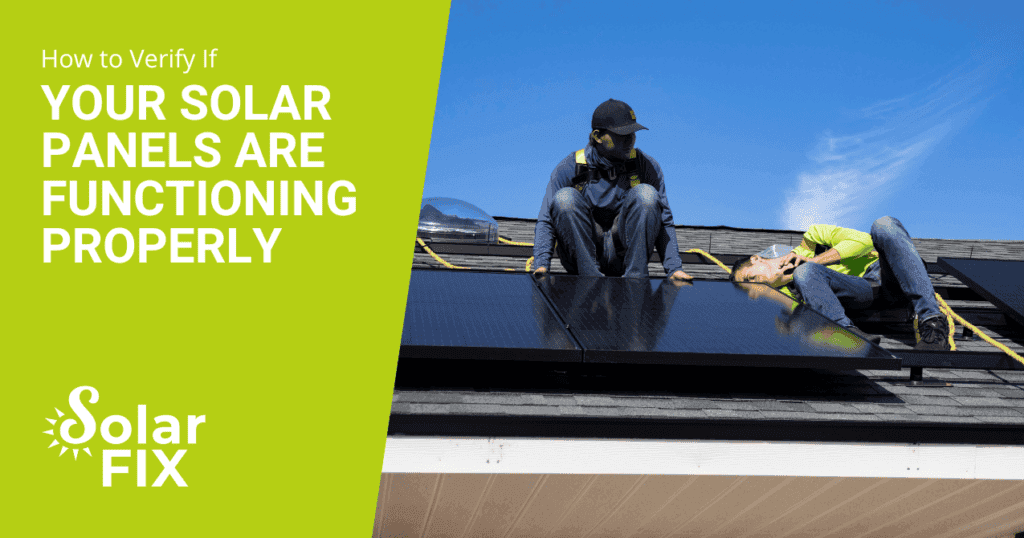
Understanding Solar Panel Performance
No solar system produces at nameplate capacity every day. Weather, seasonal sun angle, orientation, roof shading, panel temperature, and cleanliness all affect real-world output. The goal isn't to hit a magic number — it's to catch systems that are producing noticeably less than a properly operating system of the same size should, in the same conditions.
Monitoring Your Solar Panel System
Check the inverter display
Your inverter is the brain of the system. Green lights typically mean things are running normally; red or orange lights signal a fault. The display usually shows current production in watts and any active error codes — note them down and consult your inverter's manual or call us for a translation.
Use a solar monitoring app
Modern solar systems usually ship with monitoring software. Apps from Enphase, SolarEdge, SMA, and others give you real-time production data, alerts, and historical performance you can compare month to month.
Examine your electricity bills
Compare pre-install and post-install bills side by side, using kilowatt-hours rather than dollars (rates change). A working system should show a meaningful drop in the kWh you buy from the utility during sunny months.
Inspect the panels themselves
Walk around and look at the array from the ground. Watch for dust or bird droppings covering the surface, physical damage like cracks or chips in the glass, and new shading from trees that have grown since install.
Check the wiring and mounting
Look at any wiring you can see for damage or exposed conductors, verify the array is still tight to the roof, and confirm the inverter connections look secure. If anything looks off, stop — do not touch it — and call a licensed solar tech.
Schedule professional maintenance
A pro brings tools and training you don't have: IV curve tracers, thermal imaging, torque tools, and years of pattern recognition. A proper annual maintenance visit catches problems long before they show up on a utility bill.
Get a performance audit
A certified technician can compare your actual production to the modeled production for your system size, orientation, and shading — and tell you exactly how far off you are and why.
Address reduced output
If production is down, work through the obvious first: clean the panels, remove any new shade, check for error codes on the inverter, and account for weather or seasonal sun angle. If it's still off, escalate to a professional inspection.
Deal with faulty equipment
Inverters fail. Individual panels degrade. Rodents chew wiring. When it's equipment-level, the fix is a real repair — not a cleaning — and that's where we come in.
Using Professional Services
If you've worked through the checklist above and something still isn't adding up, that's when you bring in a pro. A licensed solar tech can do things you can't safely do from the driveway: energize test points, isolate strings, measure IV curves, run thermal imaging, and swap in known-good components.
SolarFIX offers full solar panel inspections , solar panel repair , and solar inverter repair across the Phoenix metro area.
FAQ
How often should I check my solar panel production?+
At minimum, glance at your monitoring app once a week. Compare month-over-month totals to catch a slow drift downward that easily goes unnoticed until a utility bill spikes.
How do I know if my inverter has failed?+
The most common signs are: no production at all despite sunny weather, an error code on the display, red or orange status lights, or a hot/burning smell near the inverter. Any of these means call a solar tech immediately.
Can dust really cut my solar production?+
In Arizona, absolutely. A season of dust and pollen buildup can reduce output by 5 to 15 percent. A rinse-off during monsoon season often restores a chunk of that. A professional cleaning restores the rest.
Not sure your system is working?
Book an inspection with SolarFIX and get a real answer, in writing. Licensed, bonded, insured — AZ ROC #323541.