
How to Safely Turn Off Your Solar System (and What the Switches Do)
Most solar owners never touch the switches on the side of the house until something goes wrong. Here's what each one does, the usual order to turn them off, and the part people miss: panels in the sun are still making power.
“The price was in budget and they were able to accommodate our roofer's schedule.”
Suzette L. · Google Review
“I highly recommend Solar Fix for their caring approach and top-notch service!”
Melissa D. · Google Review
“Very refined process in place here with lots of communication.”
Brian G. · Google Review
The short answer
Most rooftop solar systems have three or four places where you can turn them off: a rapid shutdown switch, an AC disconnect, the inverter's own switch, and a solar breaker in your electrical panel. In an emergency, the one to know is the rapid shutdown switch or the AC disconnect near your meter.
Turning the system off stops it from sending power into your home. It does not make the panels on the roof safe to touch. Panels in daylight are still making electricity.
Why you might need to turn it off
Homeowners usually look for the switches when:
- ▸There's a fire, smoke, a burning smell or water near the equipment.
- ▸A storm damaged the panels or wiring.
- ▸An inverter shows an error and the manufacturer suggests a restart.
- ▸A roofer, electrician or pool installer asks to have the solar off while they work nearby.
If there's a fire or smoke, get everyone out and call 911 first. Tell the dispatcher the home has solar. The rapid shutdown switch is there mainly for firefighters.
What the switches do
Equipment and labels vary by brand, installer and the year the system went in. Here's what you'll usually find.
Rapid shutdown switch
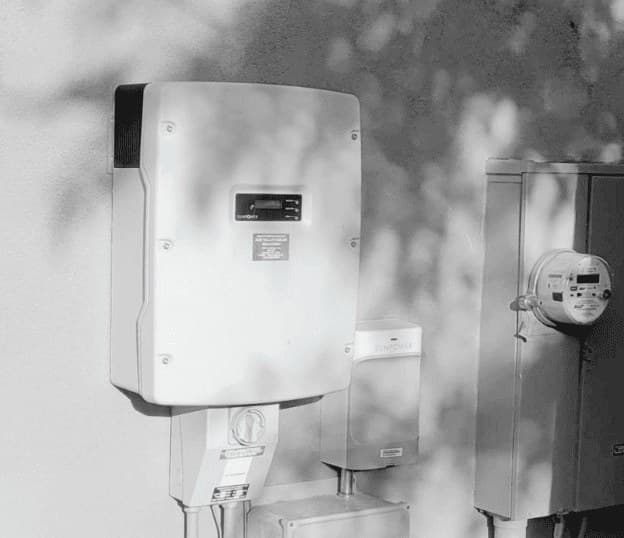
The rapid shutdown switch tells the system to drop the voltage in the wiring on and around the roof. It's usually near the electric meter or the solar disconnect and is often marked with a label saying the system is equipped with rapid shutdown.
Rapid shutdown rules first showed up in the 2014 National Electrical Code and have been tightened since. Under later editions, wiring outside the array has to drop to not more than 30 volts within 30 seconds of rapid shutdown starting. That's why it matters for firefighters: it lowers the voltage in the wires running across the roof and into the house.
On many systems, the AC disconnect is also the rapid shutdown switch. On older systems installed before the rule, there may be no rapid shutdown at all.
AC disconnect
The AC disconnect is a gray metal box, usually near the meter, with a handle or a switch. It cuts the connection between the solar system and your home's wiring. Many are labeled "PV system disconnect" or "AC disconnect."
Inverter switch
String inverters usually have their own switch. SolarEdge inverters, for example, have an ON/OFF switch on the unit, and some models also have a separate DC safety switch. SolarEdge's installation guides tell technicians to turn the inverter switch off and wait 5 minutes for the capacitors to discharge before working inside the unit.
Microinverter systems, such as Enphase, don't have one inverter on the wall. They're usually shut down from the AC disconnect or the breakers in the solar combiner box.
Solar breaker
Your main electrical panel usually has a breaker labeled for the solar system. Some systems connect elsewhere, so you may not find one there. If the solar breaker has tripped, our guide to a solar breaker that keeps tripping explains what that can mean.
The usual order to turn it off
Your installer's manual and the labels on your equipment come first. If you don't have those, this is the general order technicians describe:
1. Rapid shutdown switch or AC disconnect. If they're the same switch, turn it off. In an emergency, this may be the only step you take. 2. Inverter switch. On a string inverter, turn the switch on the unit to off. Don't open the inverter. 3. Solar breaker. Turn off the solar breaker in your main panel if you have one.
To turn it back on, go in reverse order, unless your manual says otherwise. Some inverters take several minutes to start producing after a restart. Check your monitoring app later in the day to make sure production comes back.
Don't restart the system if any equipment looks burned, wet or damaged, or during a lightning storm.
What turning it off doesn't do
This is the part that catches people.
- ▸The panels stay live in daylight. Solar panels make power whenever light hits them. Even with every switch off, the panels and the wiring right at them can carry voltage.
- ▸It doesn't make the roof a safe place to work. Stepping on panels can crack them, and loose or damaged wiring can still be energized. Leave roof work to a licensed solar company.
- ▸It doesn't fix the cause. If a breaker trips again, an error returns, or something smells hot, the system needs a technician, not another reset.
Before you need it
A few minutes now can save time later:
- ▸Find the switches. Walk around the house and note where the rapid shutdown switch, AC disconnect and inverter are.
- ▸Read the labels. Take a photo of each label so you have it on your phone.
- ▸Find the manual. Look for your installation paperwork or the manufacturer's quick guide.
- ▸Tell your household. Make sure anyone who might need to shut the system off knows where the switch is.
If labels are missing, faded or confusing, that's worth fixing. Labels matter to firefighters and to the next technician, too.
When to call for help
Get the system checked if:
- ▸You see burn marks, melted parts, smoke or a hot smell near any solar equipment.
- ▸A breaker or switch won't stay on.
- ▸The system doesn't start producing again after a restart.
- ▸You can't find a rapid shutdown switch or disconnect, or the labels are missing.
A solar repair visit can find out why a system won't run, and our electrical services team handles disconnects, breakers and labeling. If you'd like the system checked on a regular schedule, a solar panel maintenance plan includes it.
The bottom line
Know where your rapid shutdown switch and AC disconnect are before you need them. In an emergency, turn the system off there and call for help. For anything else, follow your equipment's manual, turn things off in order, and remember that panels in the sun are still live. If something trips, smells hot or won't restart, have a licensed solar technician take a look.
FAQ
Does turning off my solar make the roof safe?+
No. Panels make electricity whenever light hits them. Shutting the system down stops power from flowing into your home and reduces the voltage in the wiring, but the panels themselves can still be energized in daylight. Stay off the roof and leave any work up there to a licensed solar technician.
What is the rapid shutdown switch?+
It's a switch, usually near your electric meter or the solar disconnect, that tells the system to drop the voltage in the rooftop wiring. It exists mainly so firefighters can work around the system more safely. It is often labeled with a red or white sign that says the system is equipped with rapid shutdown.
Can turning the system off and on fix it?+
Sometimes a restart clears a fault, and some manufacturers describe a restart in their troubleshooting steps. If a breaker trips again or the same error comes back, stop and have the system checked instead of resetting it over and over.
Related: Solar repair · Electrical services · Solar panel maintenance · Solar breaker keeps tripping · Why solar doesn't work in a power outage
Not sure which switch is which?
Send SolarFIX a photo of the equipment on the side of your house, including any labels, and tell us what's going on. We'll help you figure out what you're looking at and whether the system needs a visit.